
Double-Hung Replacement Windows in the Lehigh Valley
Double-hung replacement windows in the Lehigh Valley are the default for a reason: they fit the tall, narrow openings in Allentown twins, Bethlehem rowhomes, and Easton College Hill Victorians, and they are equally at home in a 1960s Whitehall ranch. If you are getting a double-hung window quote, the units will almost certainly be built to order for each opening, so the written quote is where every detail gets locked in.
This page covers how a double-hung operates, who it suits, what to ask for on the quote, and the mistakes homeowners in the Valley make most often when they replace them. When you are ready, one vetted local company measures every opening and puts the whole thing in writing.
Get a written double-hung windows quote
Enter your ZIP. One vetted local installer measures your openings and writes the quote. Nobody else gets your number.
- Free
- Written quote
- Measured in person
- One local company
- No pressure
Prefer to pick a time? Book the free measuring visit →
How a double-hung window works
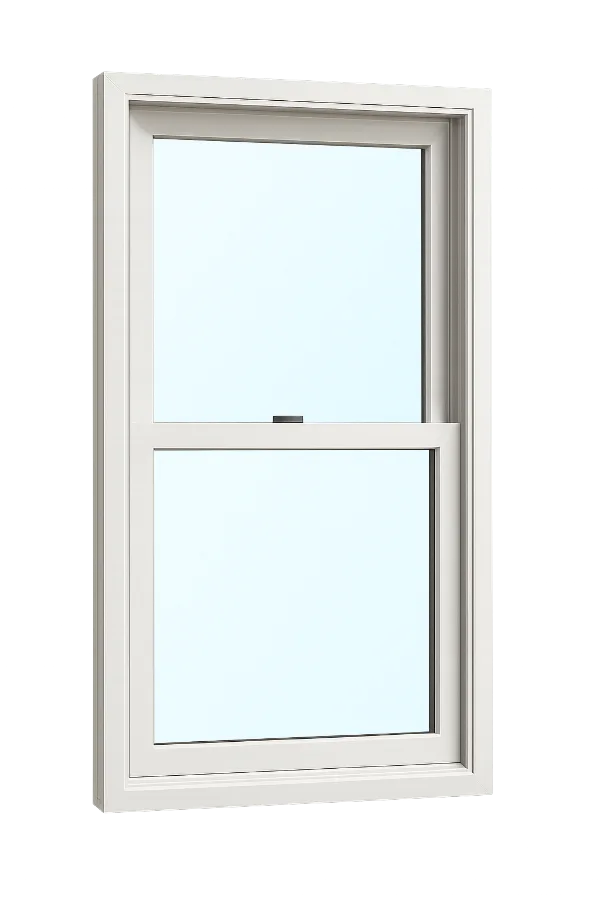
A double-hung has two sashes stacked in one frame. Both slide vertically on balances hidden in the jambs, so you can open the top, the bottom, or both for a chimney effect that pulls warm air out the top while cooler air enters below. Modern units tilt each sash inward for cleaning from inside the room, which is the feature second-floor owners appreciate most. A single-hung looks identical but only the lower sash moves; it is worth knowing which one is on your quote.
Where double-hung windows make the most sense
- Tall, narrow openings in pre-war twins, rows, and Victorians
- Bedrooms and living rooms where a screen and a familiar look matter
- Second and third floors, because tilt-in sashes clean from inside
- Homes in historic-review areas that need to keep a traditional profile
- Any room where you want ventilation without a sash swinging outward
What double-hung windows do well
- Matches the original look of most Lehigh Valley housing
- Tilt-in sashes make upstairs cleaning a two-minute job
- Does not project outward, so it works beside walkways and porches
- Widest range of sizes, colors, and grid patterns of any style
What to weigh
- The meeting rail interrupts the view compared to a casement or picture unit
- Two sliding sashes mean two sets of weatherstripping to keep tight
- Slightly less air-tight than a crank-out casement when latched
- Very wide openings need a mulled pair or triple, which adds frame
What to ask for on a double-hung window quote
A double-hung unit is built to order for each opening, so the written quote is where the spec gets locked in. Ask for each of these in writing, per opening.
- 01
Glass package
Double-pane low-E with argon fill as the baseline for our winters, with the U-factor and SHGC from the NFRC label written on the quote. Ask whether the top and bottom sash glass are identical.
- 02
Hardware
Cam locks (one or two depending on width), tilt latches, and sash lifts if you want them. Confirm the finish matches across every window on the order.
- 03
Color and interior finish
Exterior color, interior color or woodgrain laminate, and whether the interior stops and casing are new or reused. Color should appear on each line, not once at the top.
- 04
Grids
Pattern (colonial, prairie, top-sash only), profile (flat or contoured), and whether grids are sealed between the glass or applied to the surface. Between-glass grids clean far easier.
- 05
Screens
Half screen or full screen, mesh type, and frame color. A half screen leaves the top sash view unobstructed; a full screen lets you vent from the top.
- 06
Warranty
Manufacturer coverage on glass seal, frame, and balances, plus the installer’s own labor warranty term, both in writing with transfer terms.
Common mistakes when replacing double-hung windows
Accepting single-hung when the quote says "hung"
Some quotes say "hung window" and mean single-hung. If you want both sashes to move and tilt, the quote needs to say double-hung on every line.
Skipping the diagonal check on old openings
A century-old Allentown row has settled. If the installer measures only width and height, the new unit may bind on one side. Ask that diagonals were checked and how far out of square each opening is.
Leaving the meeting-rail height to chance
On a replacement, the meeting rail lands where the sash split falls. If your view from the couch is at that height, ask about an oriel (unequal sash) configuration.
Forgetting the exterior trim line
Insert replacements keep the old exterior frame. Ask whether it is capped in aluminum, wrapped, or left as painted wood, because that is what you will look at from the street.
Double-Hung windows in Lehigh Valley homes
Across Allentown, Bethlehem, and Easton, most pre-1940 openings were built for weight-and-pulley wood double-hungs. Replacing them as inserts keeps the exterior trim and the interior casing intact, which matters in Bethlehem’s historic district and on Easton’s College Hill, where exterior appearance may be reviewed. In mid-century towns such as Whitehall, Palmer, and Salisbury, the openings are usually square and sound, and a first-generation vinyl double-hung from the 1990s is the unit coming out. Either way, the quote should list each opening with its size and its own configuration.
Materials double-hung windows are usually quoted in
Double-Hung window questions
Are double-hung windows a good fit for an older Lehigh Valley home?
Usually the best fit. The tall, narrow proportions of Allentown twins and Bethlehem rows were designed around double-hungs, and a replacement double-hung keeps the sightlines, the sash split, and the trim that give those houses their look. Where an original wood frame has rotted, the installer may quote full-frame replacement for that opening so the new unit sits on a sound sill. A careful quote states insert or full-frame per window rather than assuming one method for the whole house.
What glass should I ask for on a double-hung window quote?
For our climate, double-pane low-E with argon fill is the sensible baseline; the U-factor and SHGC from the NFRC label should be written on the quote so you can compare it later. Triple-pane is available if a room faces the wind or sits over an unheated garage, and it also quiets traffic noise. Ask the installer to explain why they chose the coating they did and whether the same glass appears in every sash.
Will the new double-hungs tilt in for cleaning?
Nearly every modern double-hung tilts both sashes inward, but confirm it in writing, especially if the quote is for a builder-grade or single-hung line. Tilt-in matters most on the second and third floors of Easton and Bethlehem homes where exterior access means a tall ladder. Ask to see the tilt latch on the sample the installer brings to the measuring visit.
Can I keep my existing interior trim when I replace double-hungs?
With an insert replacement, yes. The new unit fits inside the existing frame and the interior casing and stool stay in place; the installer typically adds a new interior stop. With full-frame replacement the trim comes off and is either reinstalled or replaced. The quote should say which method applies to each opening and who handles painting or touch-up afterward.
How long does a double-hung replacement take per window?
An insert replacement in a sound opening is commonly under an hour once the crew is set up; full-frame work with a new sill and flashing takes longer. A typical Lehigh Valley house with ten to fourteen double-hungs is usually a one- or two-day install. The written quote should include the expected install duration and the lead time to manufacture your units.
Styles often quoted alongside double-hung windows
Before the measuring visit
- What's included in a window replacement quote →The line items a written quote must have, and the red flags.
- Energy efficient replacement windows →Low-E, argon, U-factor, NFRC labels, and what to ask for in writing.
- Replacement window materials compared →Vinyl, fiberglass, composite, and wood-clad: which to put on your quote.
- How to get a window replacement quote →ZIP, 60-second form, one measuring visit, written quote. Every step explained.
- Questions to ask before signing a window contract →Twelve questions on company, product, install, warranty, and terms.
One vetted installer, one written double-hung windows quote
Enter your ZIP. One vetted local installer measures your openings and writes the quote. Nobody else gets your number.
- Free
- Written quote
- Measured in person
- One local company
- No pressure
Prefer to pick a time? Book the free measuring visit →