
Casement Replacement Windows in the Lehigh Valley
Casement replacement windows in the Lehigh Valley are the choice when you want the tightest seal an operable window can give and a clear, uninterrupted view. A casement window quote from a vetted local installer should spell out the hinge side, the hardware, and the glass for every opening, because a casement swings outward and those decisions cannot be undone after the order is placed.
Below is how a casement works, where it makes the most sense in Valley homes, the spec to insist on in writing, and the errors that turn a good window into an annoying one.
Get a written casement windows quote
Enter your ZIP. One vetted local installer measures your openings and writes the quote. Nobody else gets your number.
- Free
- Written quote
- Measured in person
- One local company
- No pressure
Prefer to pick a time? Book the free measuring visit →
How a casement window works
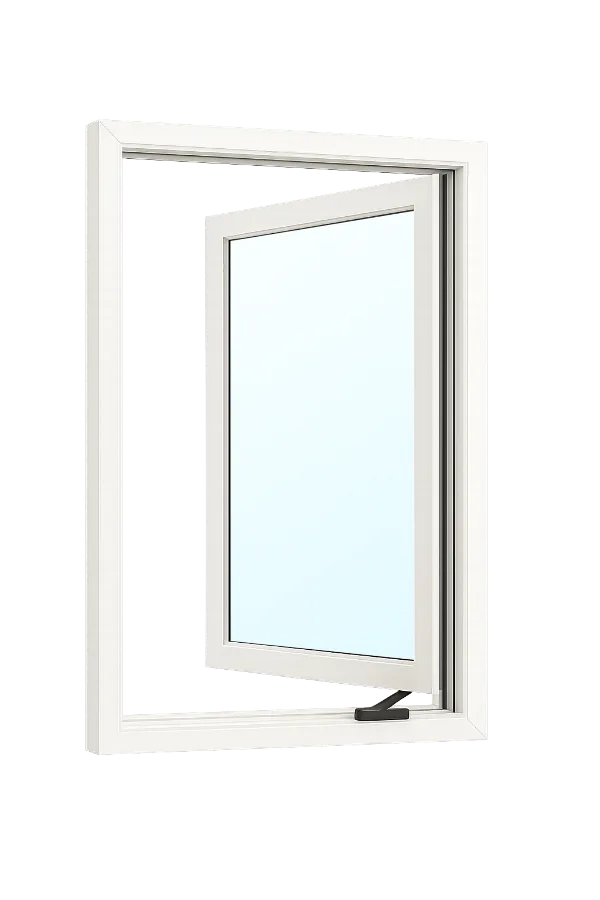
A casement is hinged on one vertical edge and opens outward with a fold-down crank at the sill. When closed, a multi-point lock pulls the sash tight against the weatherstripping along all four sides, which is why casements outperform sliding styles on air leakage. The screen sits on the inside. Because the sash swings out, it catches breezes moving along the wall and funnels them in, and it can be cranked to any angle from a crack to nearly ninety degrees.
Where casement windows make the most sense
- Over kitchen sinks and counters where reaching up to slide a sash is awkward
- Rooms facing the wind in Slatington, Wind Gap, and along the ridge
- Modern and mid-century homes with wide, short openings
- Anyone prioritizing air-tightness and a clean glass view
- Egress in bedrooms where a wide clear opening is needed
What casement windows do well
- Best air seal of any operable style thanks to compression latches
- Nothing crosses the glass; the view is as clean as a picture window
- Crank operation is easy for anyone with limited reach or strength
- Full-height opening delivers more ventilation than a half-open double-hung
What to weigh
- The sash swings outward, so it cannot open beside a walkway, deck stair, or porch roof
- Wide openings need two or three casements mulled together
- Crank hardware is the part that wears; quality matters
- Exterior glass on upper floors is harder to reach for cleaning
What to ask for on a casement window quote
A casement unit is built to order for each opening, so the written quote is where the spec gets locked in. Ask for each of these in writing, per opening.
- 01
Glass package
Low-E double-pane with argon as the baseline, U-factor and SHGC written down. Casements carry larger single panes, so ask about tempered glass where code or safety calls for it near floors and tubs.
- 02
Hardware
Fold-down or nesting crank handle, the number of lock points, and the finish. Ask which side the hinges are on for each unit and confirm it on a sketch.
- 03
Color
Exterior and interior colors per line item. Casement frames are visible from outside when open, so the exterior color choice matters more than on a double-hung.
- 04
Grids
Most homeowners leave casements grid-free for the view. If you want grids to match adjacent double-hungs, ask for the same profile and spacing so they line up across the elevation.
- 05
Screens
Interior full screens are standard. Ask about the mesh (standard fiberglass or a finer, clearer mesh) and whether the screen frame color matches the interior.
- 06
Warranty
Hardware is where casements fail first, so make sure the manufacturer warranty covers the crank and hinges, and the installer’s labor warranty covers adjustment.
Common mistakes when replacing casement windows
Hinging into a walkway
An open casement over a side path or beside a deck stair is a head-height hazard. The installer should note what is outside each opening and hinge or swap styles accordingly.
Ordering the hinge on the wrong side
Casements should generally open toward the prevailing view or breeze and away from an adjacent wall. Ask for a marked sketch with hinge sides before you sign.
Cheapening the hardware
The crank and operator arm carry the whole sash for decades. Ask for the manufacturer’s upgraded operator if one exists and confirm it is on the quote.
Assuming a casement fits any opening
A very tall, narrow original double-hung opening makes a heavy, awkward casement. In those openings a double-hung or a casement with a fixed transom is the better call.
Casement windows in Lehigh Valley homes
Casements show up most in the Valley’s post-1970 housing: split-levels in Palmer, colonials in Lower Macungie, and 2000s builds in Forks and Upper Macungie where a picture window is flanked by a pair of casements. They also make sense in exposed spots, such as ridge-top homes near Slatington or the Slate Belt, where the compression seal shrugs off the wind that pushes past a sliding sash. In older borough homes, casements are usually a kitchen or bathroom upgrade rather than a whole-house change.
Materials casement windows are usually quoted in
Casement window questions
Do casement windows seal better than double-hung windows?
Yes. A casement latches by pulling the sash into weatherstripping on all four sides, while a double-hung relies on two sliding sashes meeting at a rail. That is why casements post lower air-leakage ratings on the NFRC label. In windy spots along the Blue Mountain ridge the difference is noticeable on a cold night. Ask the installer to list the air-leakage rating for the casement line they quote so you can see it.
Can I replace a double-hung with a casement in the same opening?
Often, with caveats. The opening must be wide enough for a sash that swings comfortably, and very tall openings make a heavy casement. Installers frequently propose a casement with a fixed transom above it, or a pair of casements, to fit a tall or wide space. The quote should state the configuration for that opening and confirm whether a full-frame replacement is needed to change styles cleanly.
Are casements good for bedroom egress?
They are one of the better options, because the whole sash clears the frame and leaves a large opening. Egress dimensions are set by building code and vary with the situation, so ask the installer to confirm the clear opening of the casement they quote for each bedroom. Where a bedroom window sits over a porch roof, make sure the swing direction still works.
What hardware finishes are available on casement windows?
White and beige are standard on vinyl; fiberglass and wood-clad lines add brushed nickel, oil-rubbed bronze, black, and similar finishes. A fold-down crank that nests against the frame keeps blinds from catching. Ask for the finish on each line of the quote and to see the actual handle on the sample at the measuring visit.
How do I clean the outside of a second-floor casement?
Many casements open far enough that you can reach the exterior glass from inside, and some hinge designs slide the sash toward the center of the opening for that reason. Ask which hinge type is on the quote. If exterior access matters to you, that single detail may decide between two otherwise similar casement lines.
Styles often quoted alongside casement windows
Before the measuring visit
- What's included in a window replacement quote →The line items a written quote must have, and the red flags.
- Energy efficient replacement windows →Low-E, argon, U-factor, NFRC labels, and what to ask for in writing.
- Replacement window materials compared →Vinyl, fiberglass, composite, and wood-clad: which to put on your quote.
- How to get a window replacement quote →ZIP, 60-second form, one measuring visit, written quote. Every step explained.
- Questions to ask before signing a window contract →Twelve questions on company, product, install, warranty, and terms.
One vetted installer, one written casement windows quote
Enter your ZIP. One vetted local installer measures your openings and writes the quote. Nobody else gets your number.
- Free
- Written quote
- Measured in person
- One local company
- No pressure
Prefer to pick a time? Book the free measuring visit →